Shaolin Temple in the Snow
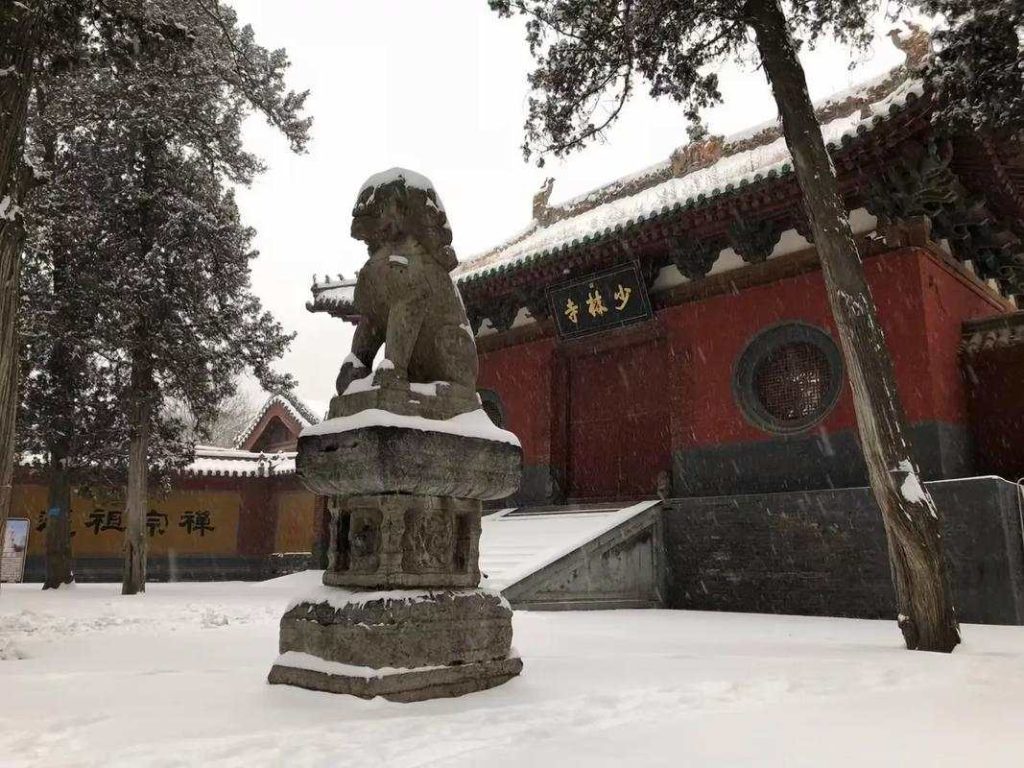
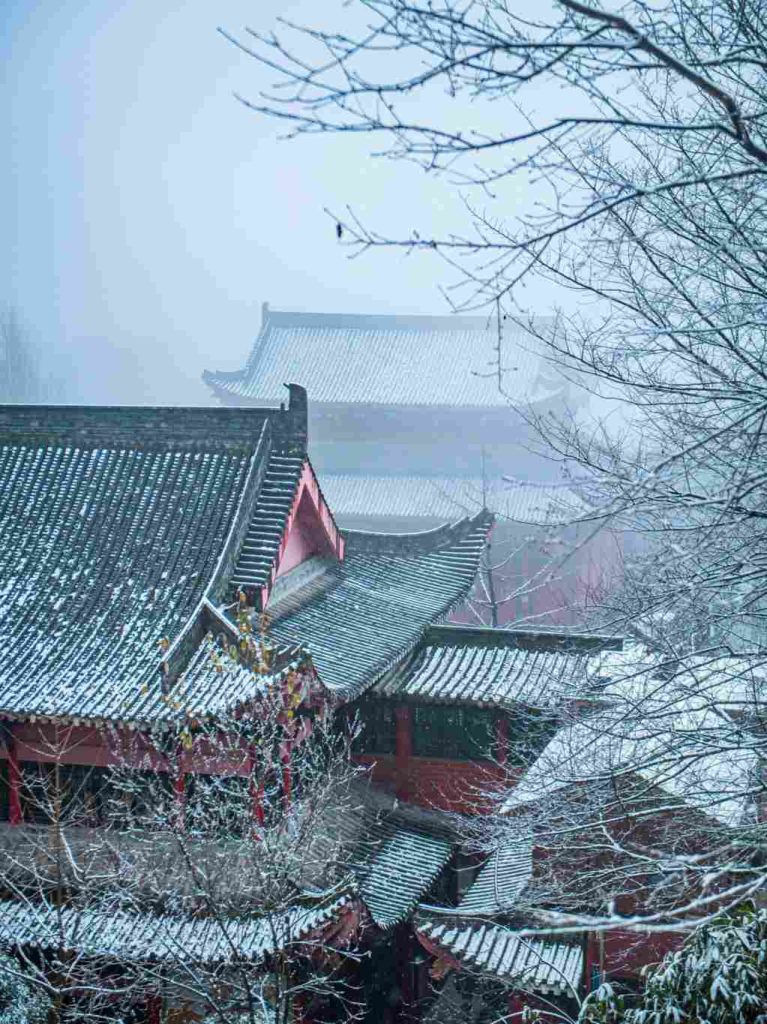
Winter on Song Mountain always brews a fated encounter in profound tranquility. Before the snow falls, a cold mist, thin as silk, shrouds the entire ancient temple.
Shaoshi Mountain sheds its lush greenery; the pines and cypresses on Wuru Peak bare their dark brown branches, like the gaunt fingers of a Zen monk, questioning the pale gray sky.
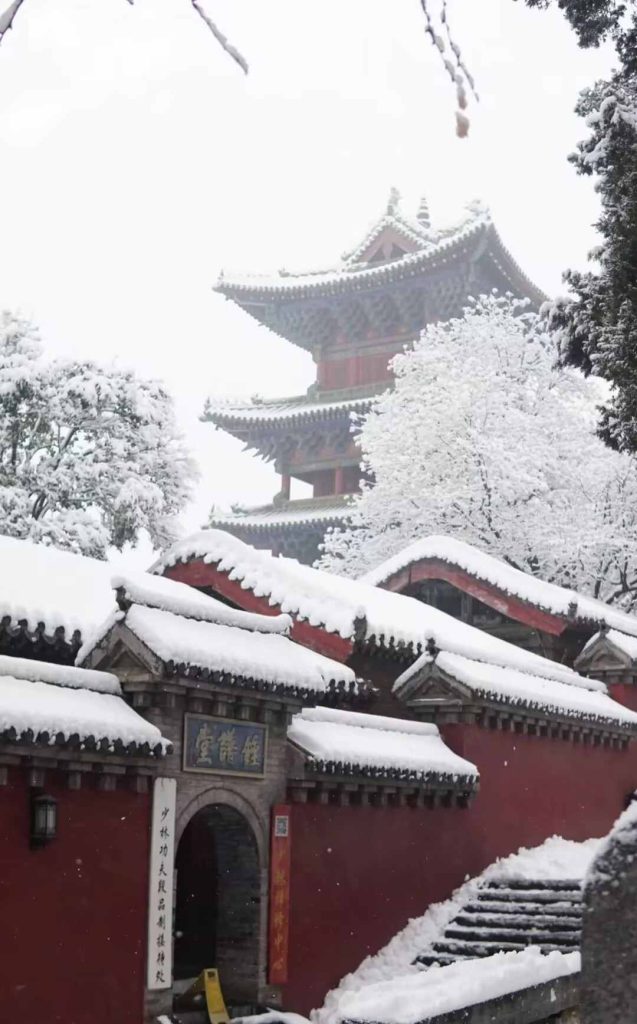
The red walls grow all the more profound in the bitter, biting wind. Withered leaves tucked in the crevices of the blue bricks are whirled by the mountain breeze, swirling low along the stone paths and rustling softly—as if the ancient temple is murmuring to itself.
The monks’ morning prayers never cease for the cold. Buddhist chants, wrapped around the steady tap of wooden fish, pierce the mist and blend with the undercurrent beneath the frozen Shaoxi River. The bronze bells hanging from the temple eaves are occasionally stirred by the wind; their clear, ringing notes startle a few sparrows, which flit among the bare pagoda tree branches, their eyes sweeping over the frost-frosted roof tiles, as if also waiting for a baptism of snow.
At this moment, Shaolin casts off the restlessness of the mortal world, leaving only Zen heart embracing the cold. Every inch of it exudes a quiet solemnity of poised power, like Bodhidharma’s meditation facing the wall, awaiting a purification of heaven and earth.
In the middle of the night, the cold wind suddenly intensifies; snow pellets tap against the window lattice, like shards of jade clashing together. By dawn, big snowflakes are falling in a blinding whirl, blanketing everything between heaven and earth in a sheet of pure white.
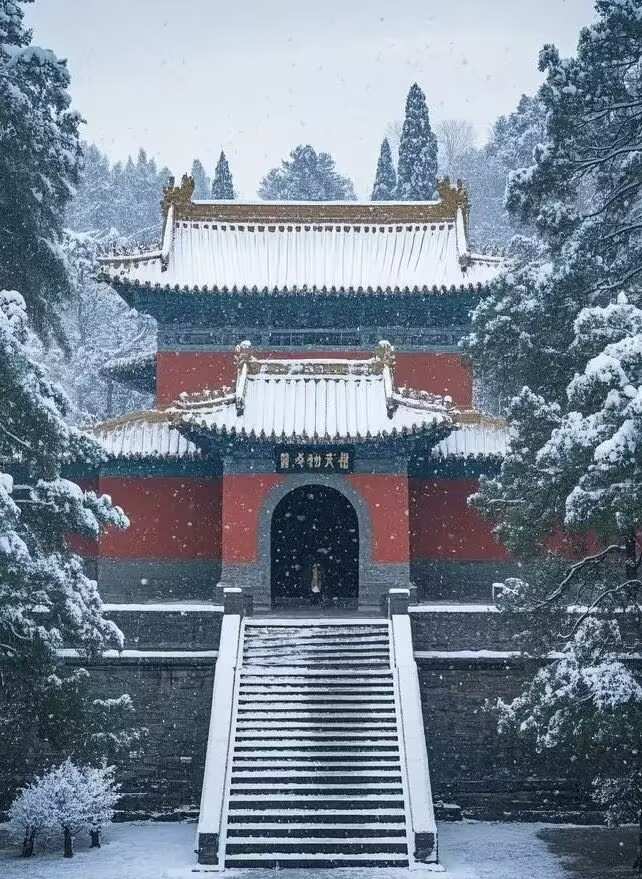
Stepping through the mountain gate, the familiar sights of days past are unrecognizable: the red walls are etched with sharp outlines by the snow, the drifts on the wall tops fluffy as cotton. Occasionally, clumps of snow fall from the overhanging eaves, striking the blue bricks and sending up tiny sprays of snowflakes that fade back into silence in an instant. The plaque bearing the three characters “Shaolin Temple” is dusted with a thin layer of snow, its gilded calligraphy glimmering faintly through the snow mist, adding a touch of solemn grandeur.
In front of the Hall of a Thousand Buddhas, the upturned eaves and angled ridges are caked with thick snow, like silver-forged wings, as if ready to carry the ancient temple soaring to the clouds. The bronze bells under the eaves are sheathed in icicles; when the wind blows, their clear, ethereal chimes cut through the snow curtain, echoing long and far through the mountain valleys.
The warrior monks, dressed in thin monastic robes, practice their morning martial arts in the snow. As their fists and feet rise and fall, snowflakes swirl around them; their powerful moves slice through the silent snow-laden air. The white mist of their breath weaves with the snow fog, curling around them like fine silk. Their toes press into the snow, leaving footprints of varying depths, which are gently covered by fresh snowfall—an apt metaphor for the true meaning of “the unity of Zen and martial arts”: martial arts are the outward power, Zen the inner clarity; in movement and stillness, all return to nature.
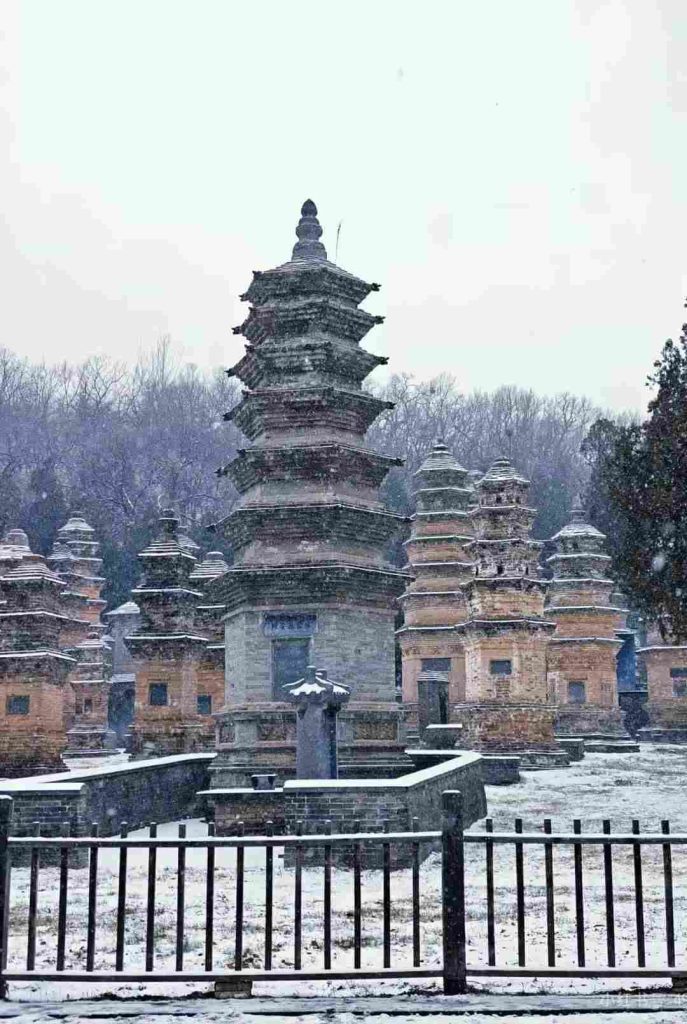
In the Forest of Stupas, more than two hundred and forty ancient pagodas are wrapped layer upon layer in snow. The grain of the brick and stone grows all the more profound against the white snow, like scriptures carved by time, whispering the millennial heritage in silence.
After the snow stops, sunlight breaks through the clouds, spilling over snow-covered Shaolin and refracting into a dazzling silver glow. A soft mountain breeze stirs, whirling up loose snow from the ground, which drifts like white mist among the temple halls. At this moment, the ancient temple is spotless, free of a single speck of dust. Red walls mirror the snow, white pagodas bathe in light, green pines bow under snow’s weight—forming a long ink wash painting with perfect shades of light and dark.
On the incense burner in front of the Hall of a Thousand Buddhas, the snow along the rim slowly melts; water droplets trickle down the burner’s walls, their “drip, drop” ringing out clearly in the silent courtyard, blending with the morning bell and Buddhist chants drifting from afar, forming the most touching Zen melody.
The monks take up brooms and gently sweep the snow from the stone paths, their movements slow and unhurried. Each sweep is like brushing away the distracting thoughts in their hearts.
In the forests of Shaoshi Mountain, the snow on the pine boughs glistens crystal clear in the sunlight; snowmelt drips down the pine needles, striking the frozen earth and leaving tiny damp smudges.
The distant mountain peaks, clad in silver like armor, form a delightful contrast with the ancient temple nearby. All between heaven and earth is clear and pure. Treading on the snow, the soft “creak, crunch” underfoot is pure and unadulterated, making one unconsciously slow down, immersed in this rare peace—as if the soul has also been washed clear and translucent by this heavy snow.
The quiet meditation before the snow, the serene beauty in the snow, the pure clarity after the snow—these form the most moving scenes of Shaolin in winter. This snow not only cloaks the ancient temple in silver, but also sweeps away the hustle and bustle of the mortal world, making the Zen spirit and noble character of millennial Shaolin stand out all the more.
When the last patch of snow slides from the eaves, when sunlight floods every courtyard, Shaolin still stands quietly in the embrace of Song Mountain, like a Zen monk, standing fast in the wind and snow of time to guard that profound tranquility and solemnity that has transcended a thousand years.