
Email: shaolinschool@163.com
Mobile: (0086) 185 2790 7238
Website: www.shaolinwushu.net
Address: 300 meters east to Shaolin Temple inside Shaolin scenic area, Dengfeng City, Henan Province, China.
Introduction to Shaolin Chan Buddhism
Shaolin Chan Buddhism originates from Shaolin Temple, founded by Bodhidharma. It is the mainstream school of Chinese Chan Buddhism, adhering to the core tenets: No established scriptures, direct pointing to human mind, realizing one’s true nature and attaining Buddhahood. It advocates sudden enlightenment and integrates Chan meditation with martial arts, exerting profound influence on traditional Chinese culture and Buddhism.
1. Historical Origin
•Shaolin Temple was built in the Northern Wei Dynasty. Initially it spread early Hinayana meditation.
•In the late Northern Wei period, Patriarch Bodhidharma came to China, meditated facing the wall for nine years at Shaolin Temple, and pioneered Mahayana wall-gazing meditation, honored as the First Patriarch of Chinese Chan Buddhism.
•The Chan lineage was passed down through six patriarchs. The Sixth Patriarch Huineng established the prevailing Southern School emphasizing sudden enlightenment, while the Northern School focused on gradual cultivation.
•In the Yuan Dynasty, Shaolin Chan flourished and mainly inherited the Caodong School, forming the time-honored tradition of combining Chan and Kungfu.
2. Core Philosophy
•All living beings are inherently endowed with Buddha-nature, and mortal troubles are merely external distractions.
•Sudden Enlightenment: Achieve spiritual awakening in an instant and perceive original true mind.
•Gradual Enlightenment: Purify the mind step by step through persistent cultivation.
•Bodhidharma’s Two Approaches and Four Practices: Gain spiritual insight through reasoning, and practice self-cultivation in daily deeds.
3. Unity of Chan and Shaolin Kungfu
Regard Chan meditation as the essence and Shaolin Kungfu as the application. Calm the mind via meditation and strengthen the body through martial practice. Practicing Kungfu is also practicing Chan, seeking inner peace amid movements.
4. Classics & Lineage
Key scriptures include Lankavatara Sutra, Diamond Sutra and Platform Sutra of the Sixth Patriarch.
The Chan lineage developed into five major branches, and Shaolin Temple has long been the ancestral shrine of authentic Chan heritage.
5. Cultural Influence
Shaolin Chan Buddhism is the finest representative of localized Chinese Buddhism. It blends Chan philosophy, Shaolin Kungfu, traditional medicine and classical arts, shaping unique oriental spiritual wisdom and spreading widely across the world.

Shaolin Vegetarian Culture & The Significance of Vegetarian Diet
Shaolin Vegetarian Culture
Shaolin vegetarian cuisine is a unique dietary culture that integrates Buddhist precepts, Zen practice and martial arts training, rooted in the core spirits of compassion, purity and health preservation.
Dating back to the founding period of Shaolin Temple, monks have adhered to the Buddhist rule of no killing and taken vegetarian food as daily diet. After the Thirteen Shaolin Monks rescued the emperor in early Tang Dynasty, the imperial-level Shaolin vegetarian feast came into being, forming a time-honored traditional vegetarian food custom.
It strictly avoids meat, eggs, dairy products and five pungent herbs. Main ingredients include coarse grains, bean products, wild mushrooms, seasonal mountain vegetables and nuts. Cooking methods focus on light taste, less oil and salt, retaining original food flavor, and combining food therapy with health maintenance.
Matching the dual practice of Zen and Shaolin Kungfu, plain vegetarian diet calms the mind, restrains worldly desires, helps monks concentrate on spiritual cultivation, and meanwhile supplies sufficient balanced nutrition to support high-intensity martial arts training. The traditional monastic rule of no food after noon is also an important part of Shaolin dietary discipline.
The Significance of Being Vegetarian
1.Physical Health Benefits
Vegetarian diet is low in fat and cholesterol, rich in dietary fiber and vitamins. It effectively reduces the risk of hypertension, hyperlipidemia and cardiovascular diseases, eases gastrointestinal burden, accelerates metabolism, and helps people keep fit and energetic.
2.Spiritual and Moral Value
Keeping a vegetarian diet embodies the respect for all lives and carries forward the spirit of mercy and equality. It purifies the mind, calms emotions, eliminates greed and irritability, and cultivates peaceful and peaceful inner temperament.
3.Ecological and Environmental Meaning
Vegetarian life greatly cuts down resource consumption and greenhouse gas emissions caused by animal husbandry, saves water and land resources, reduces ecological damage, and contributes to environmental protection and sustainable development.
4.Cultural Inheritance
Shaolin vegetarian culture is an indispensable part of Shaolin Zen-medicine-martial arts culture. It advocates simple, natural and grateful lifestyles, inherits traditional Chinese health preservation wisdom, and spreads positive oriental cultural concepts to the world.
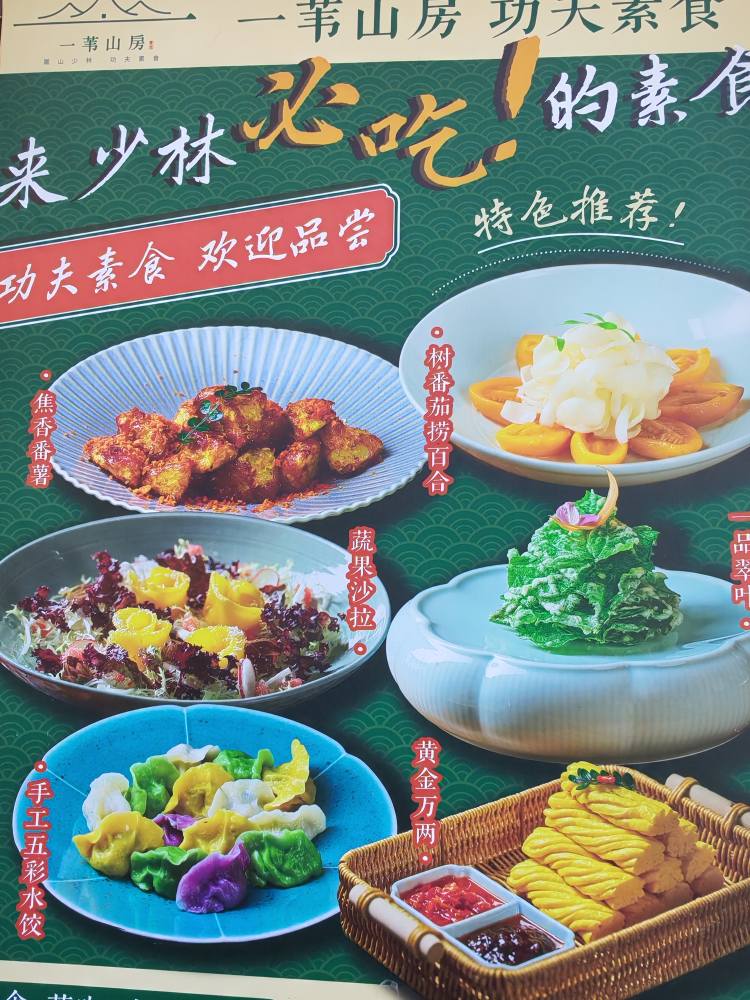
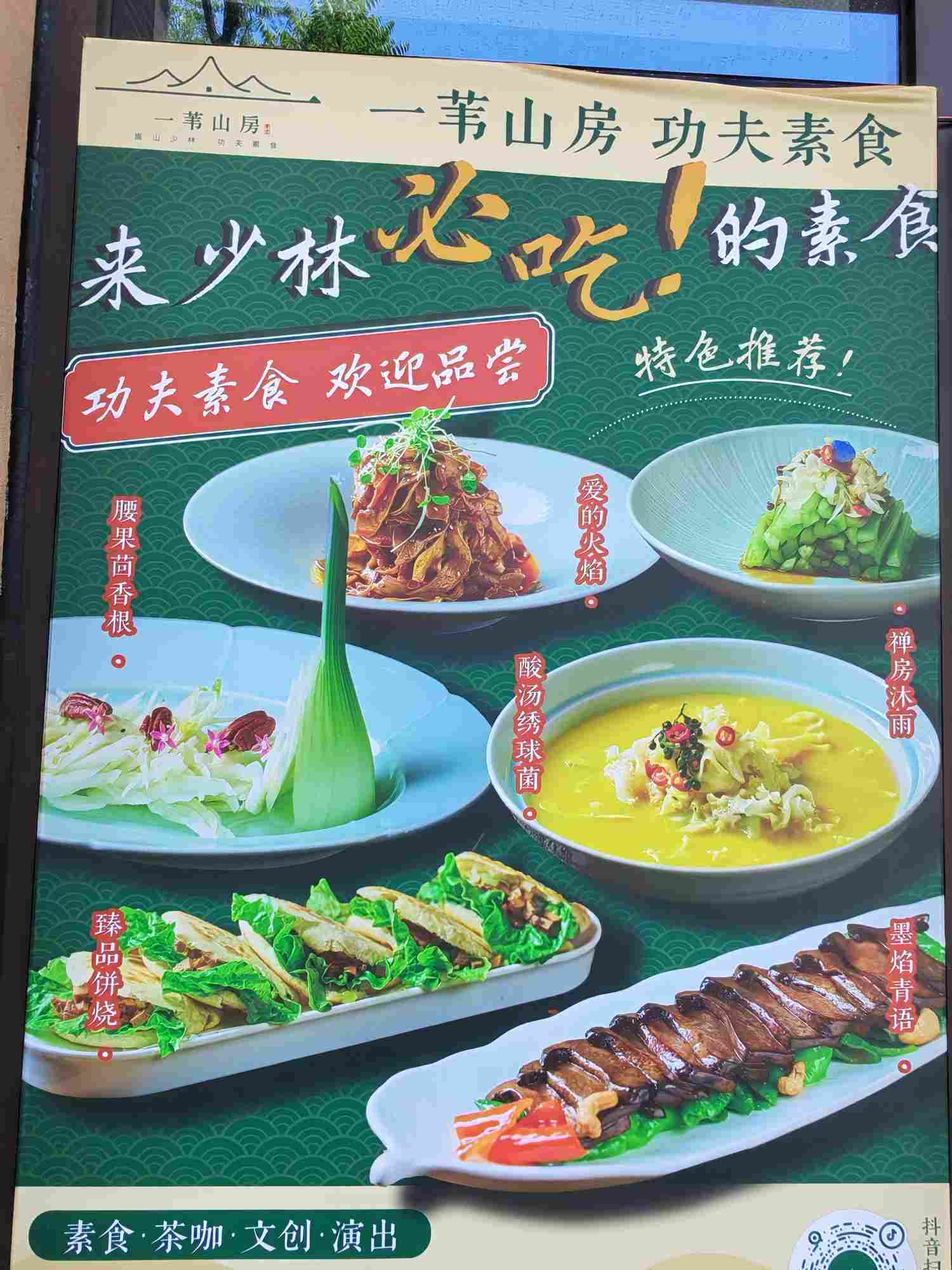
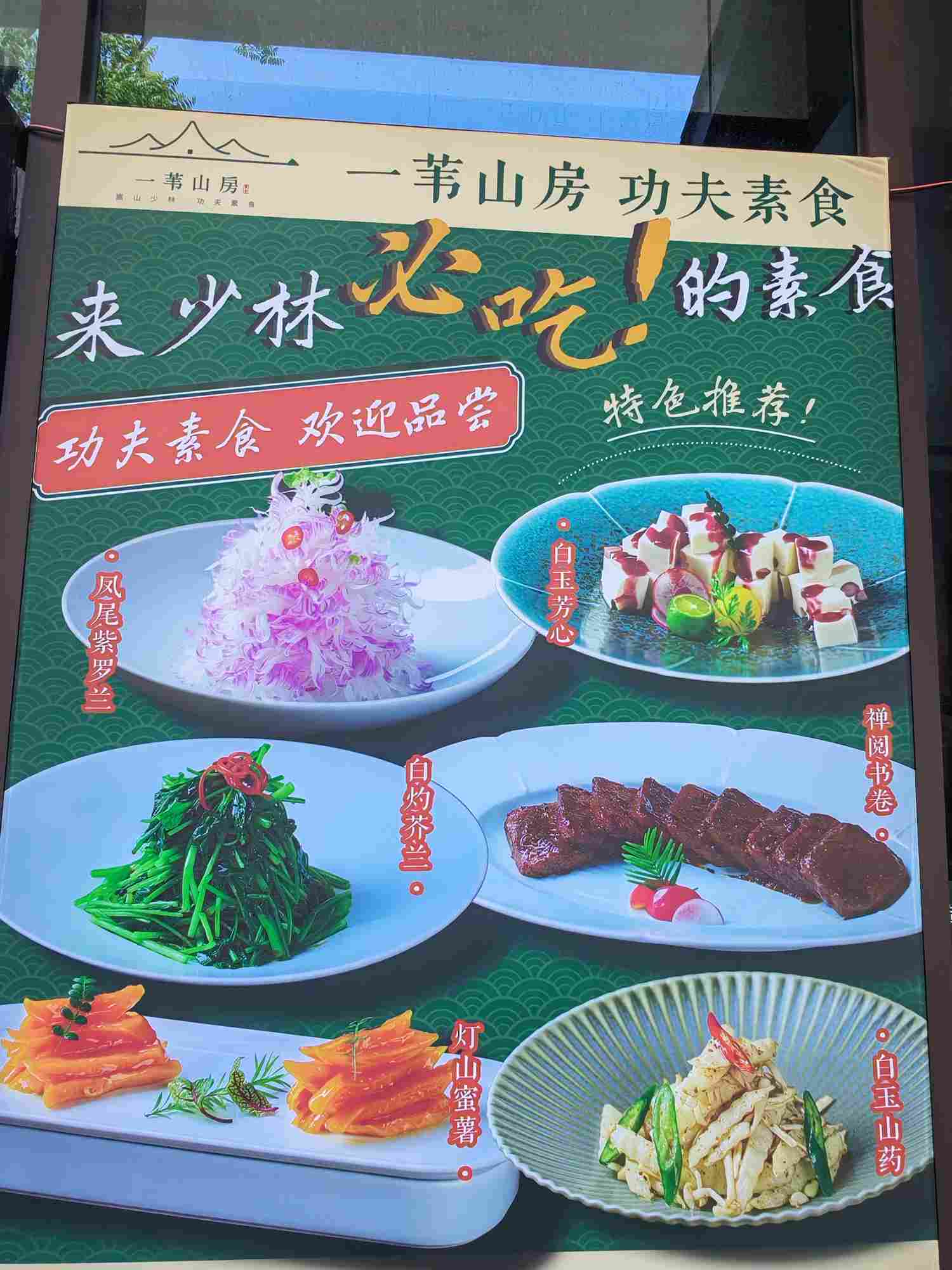
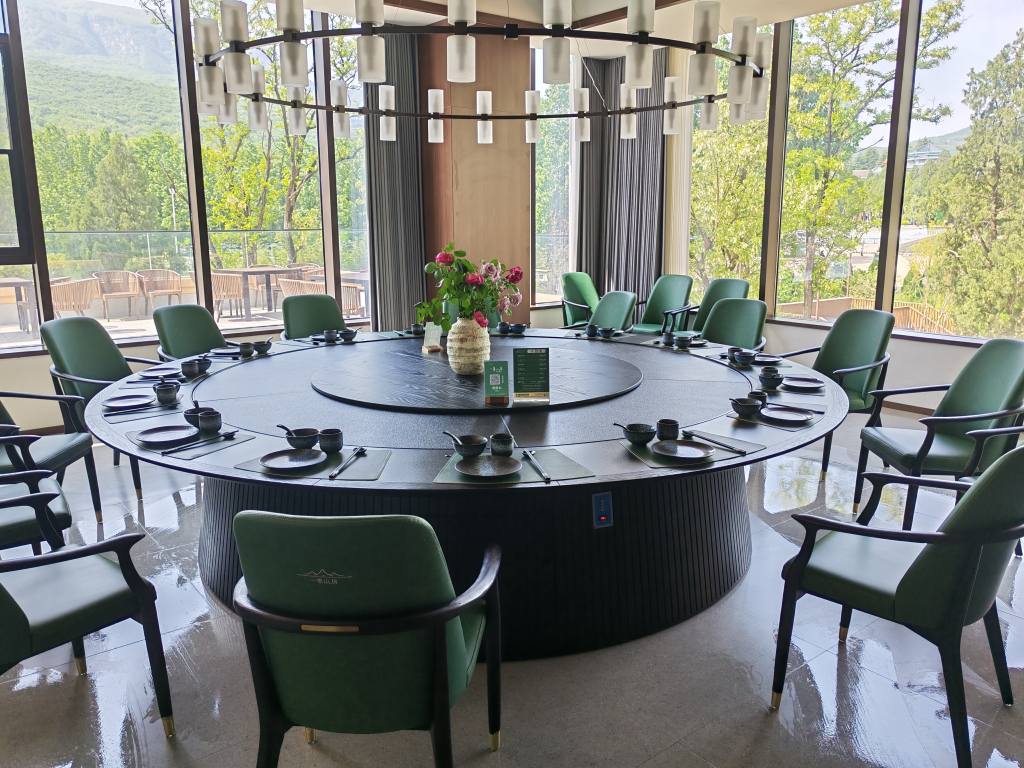
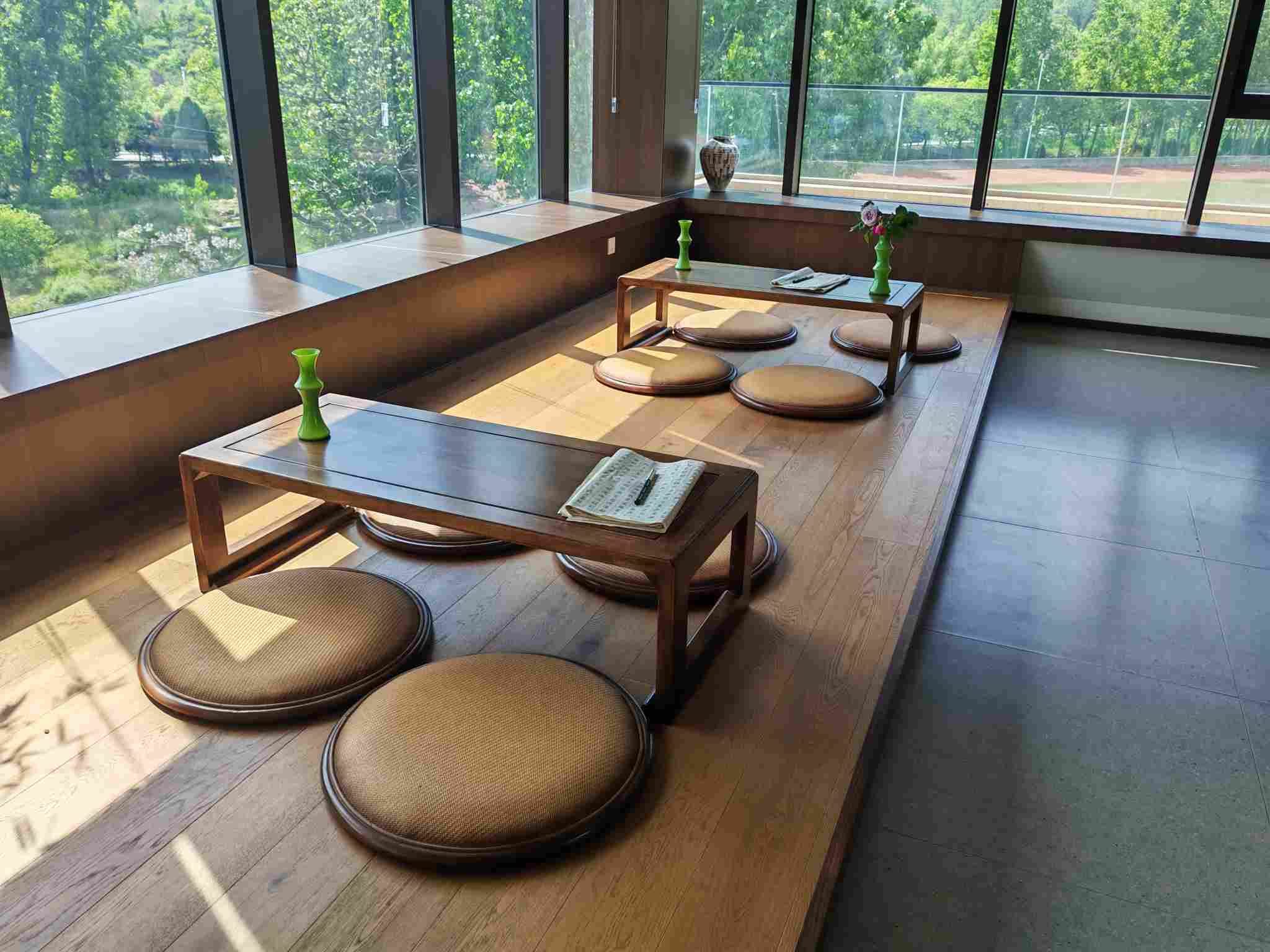
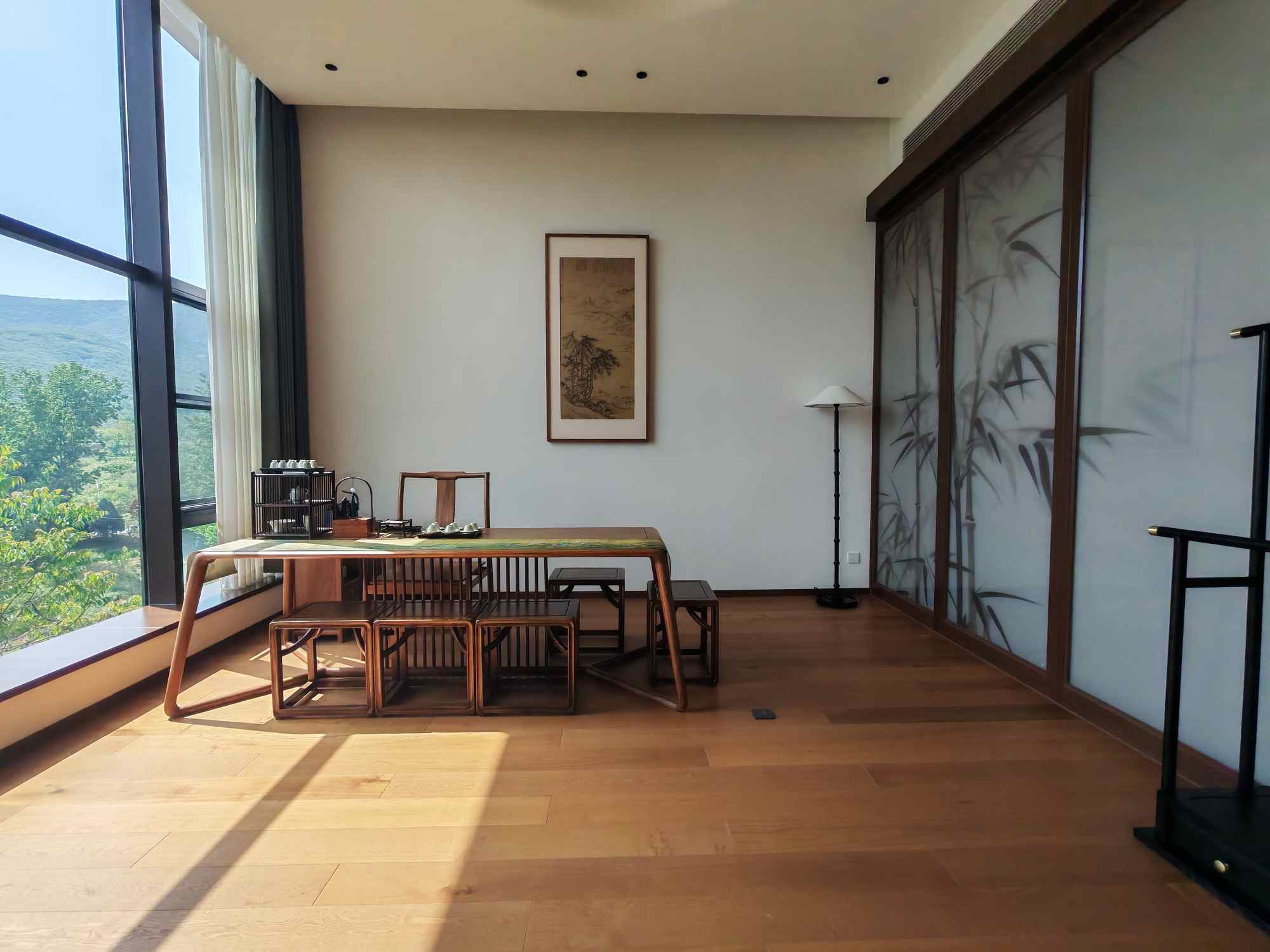
Yiwei Mountain House is a Zen-style vegetarian complex right at the entrance of Songshan Shaolin Temple Scenic Area. It is just a 3-minute walk to the main gate of Shaolin Temple, enjoying an excellent geographical location.
Its name derives from the famous allusion that Patriarch Bodhidharma crossed the river on a single reed, implying peace of mind and pure spiritual state. Built against the mountain, the building adopts simple and elegant Zen aesthetics with natural stone, dark tiles and log decoration, perfectly integrating traditional Zen charm and modern style.
Layout and Features
It serves affordable Shaolin-style simple vegetarian meals and local specialty snacks, including vegetarian noodles, steamed buns, wild vegetable dishes and health congee. With reasonable prices and comfortable environment, it is ideal for tourists to have quick and light meals.
Equipped with landscape seats and private dining rooms, it is perfect for family gatherings and business receptions. Guests can enjoy panoramic mountain views through large windows while tasting authentic Shaolin vegetarian delicacies such as Arhat Vegetarian Feast and assorted wild mushroom dishes. All dishes are cooked lightly following the traditional Shaolin vegetarian diet concept, healthy and original in taste.
The house is furnished with Zen art decorations, tea experience areas and Shaolin Kungfu culture exhibition areas. It regularly holds Zen tea parties, vegetarian culture lectures and traditional cultural activities, allowing visitors to experience the essence of Shaolin Zen culture in person.
Cultural Connotation
Taking vegetarian food as the carrier and Zen culture as the core, Yiwei Mountain House inherits the thousand-year-old Shaolin vegetarian tradition. It advocates healthy diet, respect for all lives and peaceful spiritual practice, being the top choice for tourists to taste authentic Shaolin vegetarian cuisine and experience profound Zen culture.
Practical Information
Email: shaolinschool@163.com
Mobile Phone: (0086) 185 2790 7238
Address: 300 meters east to Shaolin Temple inside Shaolin scenic area,Dengfeng City,Henan Province,China.

