Shaolin Yongtai Temple
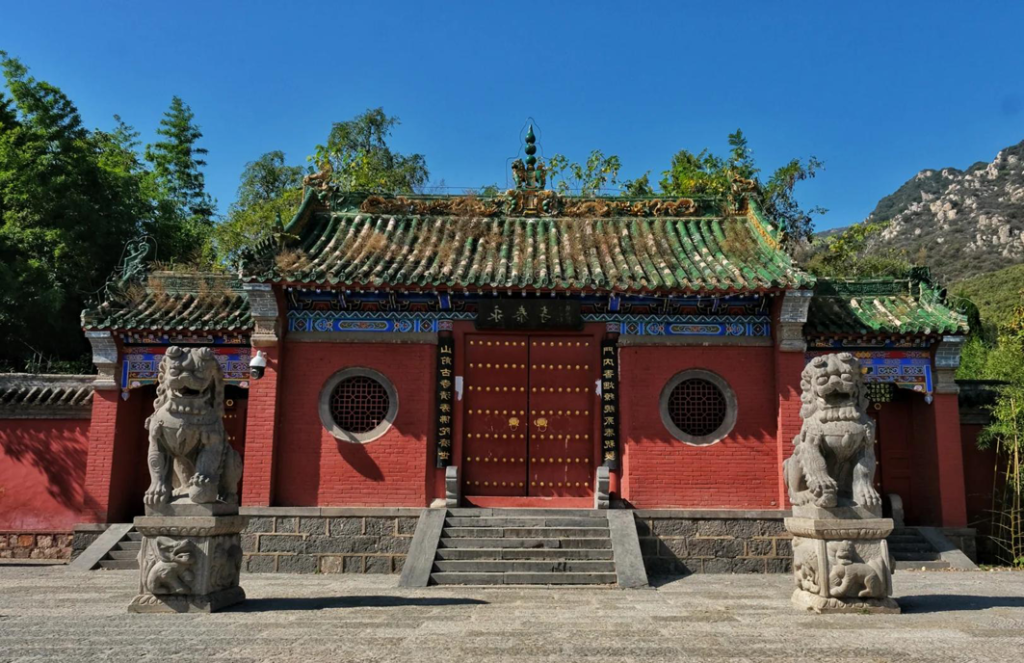
As China’s earliest‑surviving imperial nunnery, Yongtai Temple exudes ancient charm with its red walls and green tiles. Majestic Tang‑era pagodas stand on the grounds, bearing witness to profound millennial‑old historical tales.
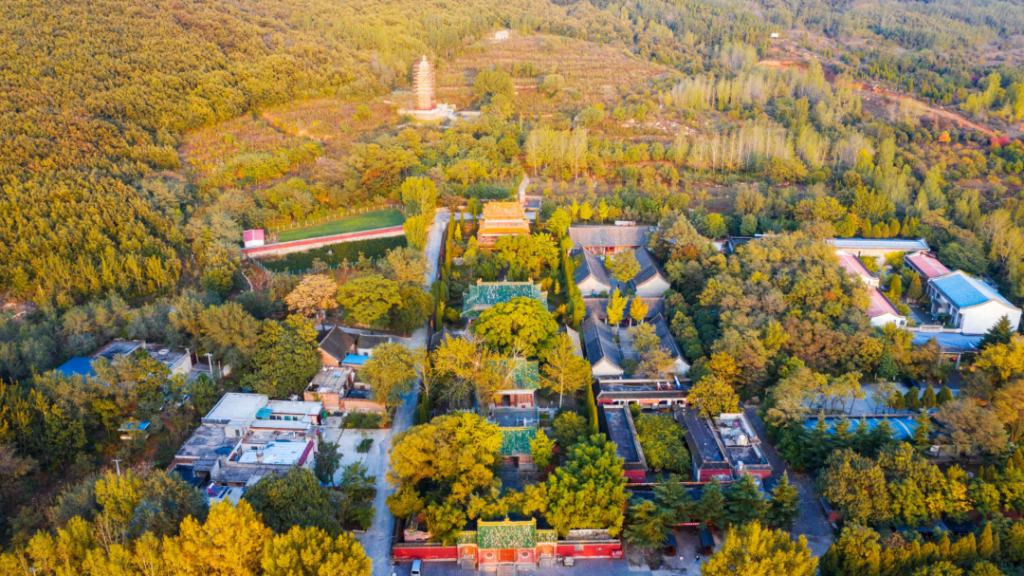
Nestled on the southern slope of Taishi Mountain of Songshan, roughly 11 kilometres northwest of Dengfeng urban area, Yongtai Temple is built against the mountains. Facing west toward Shaolin Temple at a distance of around 2 kilometres, it backs onto Wangdu Peak, adjoins Zijing Peak to the north, and commands a southward view of Shaoshi Mountain. Surrounded by rolling mountains and lush woods, it boasts a serene and secluded setting.
Originally named Minglian Temple, Yongtai Temple was first constructed in the 2nd year of the Zhengguang reign of the Northern Wei Dynasty (521 AD). It was an imperial‑commissioned nunnery erected by Emperor Xiaoming Yuan Xu, elder brother of Princess Yongtai, daughter of Emperor Xuanwu Yuan Ke of Northern Wei, for the princess to pursue monastic practice. Built beside the pagoda of Princess Minglian — daughter of Emperor Wu of Liang and a disciple of Bodhidharma — it was initially called Minglian Temple, and later renamed Yongtai Temple. In 1963, Yongtai Temple and its pagoda complex were designated one of Henan Province’s first‑batch Provincial Major Cultural Relics Protection Units. In 2001, the State Council listed it among the National Major Cultural Relics Protection Units. The temple features a five‑courtyard central‑axis layout, stretching 424 metres east‑west and 157 metres north‑south, covering a total area of more than 6 600 square metres.
Key Cultural Relics
Two Tang‑Dynasty Stone Sutra Pillars
Northern Pillar: Erected in the 12th year of the Tianbao reign of the Tang Dynasty (753 AD). Octagonal in shape, it stands 1.03 metres high. Each facet bears carved Buddhist niches enshrining one Buddha flanked by two disciples. It was built by imperial order.
– Southern Pillar: Dated to the 9th year of the Tianbao reign of the Tang Dynasty (750 AD). This octagonal pillar is 1.33 metres tall. Its niches depict one Buddha and two disciples, with some Buddha figures displaying the wish‑granting mudra. The pillar shaft bears the preface and full text of the *Uṣṇīṣa Vijaya Dhāraṇī‑sūtra*. Commissioned by imperial edict, it carries immense historical and artistic value.
Tang‑Dynasty Yongtai Temple Stele
Carved and erected in the 11th year of the Tianbao reign of the Tang Dynasty (752 AD), the stele rises about 2.3 metres. Its head is decorated with six coiled dragons, resting on a square stone base. The front face is finely engraved with line‑drawings of Buddhas, disciples, bodhisattvas, heavenly kings and guardian warriors. On the reverse side sits a seal‑script title *Stele of Yongtai Temple of the Tang Dynasty*, beneath which regular‑script inscriptions chronicle the temple’s evolution and nunnery activities from the Northern Wei through the Tang Dynasty. It constitutes the core primary source for studying Yongtai Temple.
Mahavira Hall
The Mahavira Hall is the principal building of Yongtai Temple, reconstructed in the Qing Dynasty. Adopting a double‑eave hip‑and‑gable roof covered with green glazed tiles, it features a front surrounding veranda. The hall spans five bays across its front, measuring 20.69 metres north‑south, and extends three bays in depth at 12.94 metres east‑west. Eight sloped ridge ornaments decorate the building. At the front end of each ridge sit myth‑animal figurines, arranged in sequence: dragon, phoenix, lion, heavenly steed, sea horse, kylin, and fish‑dragon. Double‑arm five‑colour bracket sets are laid out intricately and elegantly beneath both upper and lower eaves. Bronze wind‑bells hang from each of the eight corner ends of the two‑tiered roof. When wind stirs, clear chimes drift through the air, bringing peace of mind.
Yongtai Temple Pagoda Complex
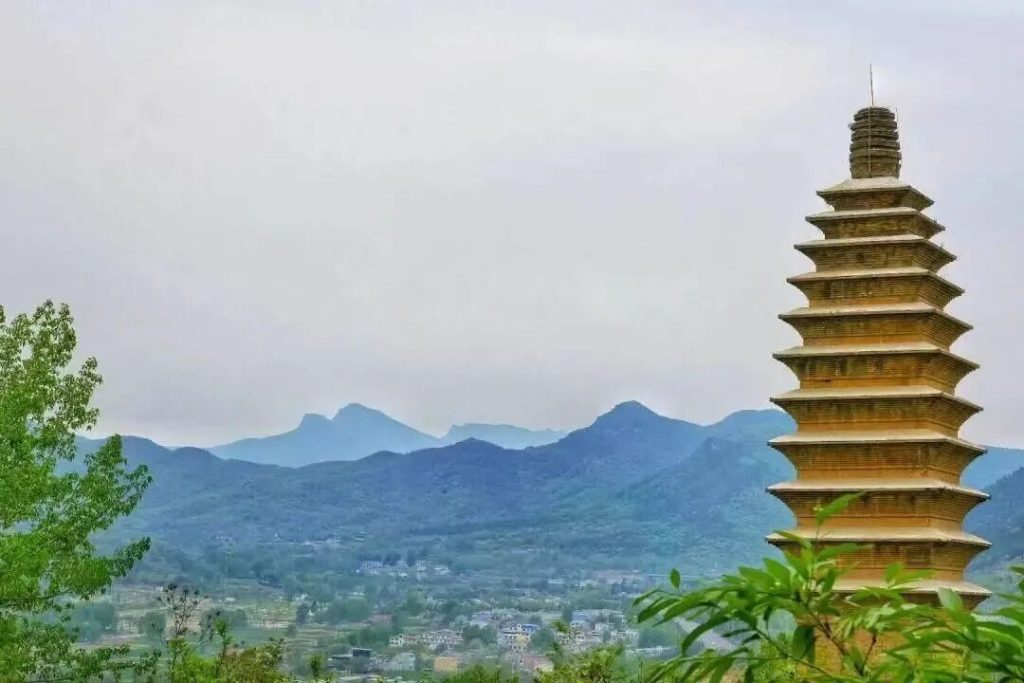
Three ancient pagodas occupy the hillside behind the monastery:
1. Yongtai Temple Pagoda: An early‑Tang quadrilateral eleven‑level dense‑eave brick pagoda. Liu Dunzhen, a distinguished modern architectural historian and educator, praised it as a representative masterpiece of high‑Tang dense‑eave pagoda architecture.
2. Jun’an Master Pagoda: A Jin‑Dynasty square two‑storey brick pagoda with its roof missing. Exquisite brick carvings on its Sumeru‑style pedestal remain well‑preserved.
3. Joint Burial Pagoda of Nuns Suran and Wuwei: A Ming‑Dynasty brick pagoda with a rare five‑layer spherical pagoda body.