

Overseas Viral Cities in China & Why You Must Visit Shaolin Temple
Part I · Overseas Viral Cities in China
1.Beijing
As China’s capital, it is the most widely recognized city in the international arena where history and modernity coexist. Overseas content creators are drawn to the red walls of the Forbidden City, the Great Wall, the Temple of Heaven, traditional hutongs and the Central Axis. At the same time, they marvel at modern landmarks such as Daxing International Airport and the National Centre for the Performing Arts. Here, visitors can trace the grand legacy of the Yuan, Ming and Qing dynasties while witnessing the dynamism of a major modern nation. Imperial heritage, time-honored local snacks and everyday street life blend together, making Beijing the first stop for many international travellers to China.
2.Shanghai
Shanghai stands for modern, cosmopolitan China on global social media. The Bund’s colonial skyline, the skyscrapers of Lujiazui, Wukang Road and the Yu Garden are among the most frequently featured scenes on Instagram and YouTube. It serves as a gateway where East meets West: former concession architecture, world-class shopping districts, refined café culture and top-tier exhibitions and art events converge. Young audiences overseas often describe Shanghai with the phrase “East meets West”, seeing it as a symbol of openness, fashion, efficiency and modern glamour.
3.Chongqing
Dubbed China’s “cyberpunk mountain city”, Chongqing has become a viral sensation on TikTok thanks to its dramatic terrain. Its hilly landscape creates surreal sights: light rail trains passing through residential buildings, the Yangtze River Cableway, multi-level interchanges and glowing riverside nightscapes. Footage of this extraordinary urban landscape has swept across the globe, with many international viewers commenting that it feels otherworldly. Spicy Sichuan cuisine, Hongyadong, riverside night views and mountain trails combine to form a vivid, immersive cityscape with overwhelming visual appeal.
4.Chengdu
Chengdu is the heart of the “Chinamaxxing” trend, offering immersive traditional Chinese lifestyle experiences that resonate deeply with overseas Gen Z. The giant panda is its iconic global mascot, yet its laid-back atmosphere is equally captivating: ancient teahouses, covered-bowl tea, Sichuan opera face-changing, hotpot and leisurely market strolls. International visitors come to understand that China is far more than rapid development; it also nurtures a gentle, relaxed Eastern aesthetic of life. Many creators travel here specially for wellness, tea culture and slow, authentic local living.
5.Xi’an
To global audiences, Xi’an embodies the archetype of ancient China. The Terracotta Army is a world-famous cultural icon, while cycling on the ancient city wall, the Giant Wild Goose Pagoda, the Tang Paradise and the Muslim Quarter are widely shared across short-video platforms. As the starting point of the Silk Road, it carries the memory of the prosperous Han and Tang dynasties. Its rich archaeological heritage and classical aesthetics make it an essential destination for history lovers worldwide.
6.Hangzhou
Hangzhou has risen to international fame through a blend of West Lake, Song-dynasty culture and its digital economy. The West Lake, Su Causeway, Lingyin Temple and Longjing tea plantations paint an idyllic vision of Jiangnan, while digital payments and e-commerce showcase cutting-edge innovation. To overseas netizens, Hangzhou represents a perfect fusion of poetic tradition and technological advancement. The G20 Summit further elevated its global profile, and its serene landscapes and Song-era aesthetics are especially beloved by European, American and Korean creators.
7.Nanjing
Nanjing has maintained strong overseas cultural influence in recent years. The Ming Xiaoling Mausoleum, Sun Yat-sen Mausoleum, the Qinhuai River and its famous plane-tree avenues preserve the quiet legacy of the Six Dynasties. International athletics events and cultural exhibitions continue to boost its global exposure. Less dramatically grand than Xi’an, it exudes a restrained, profound charm, attracting cultural travellers who seek a quieter encounter with history.
8.Suzhou
Suzhou’s classical gardens enjoy an unparalleled reputation worldwide and are regarded as the pinnacle of Chinese garden aesthetics. The Humble Administrator’s Garden, Lion Grove Garden, Pingjiang Road, Kunqu Opera and Suzhou embroidery capture the essence of Eastern freehand art with whitewashed walls, black tiles and winding waterways. Architects and artists from across the globe travel here to study garden design. Its delicate, subtle elegance defines the classical beauty of Jiangnan.
9.Xiamen
With its fresh coastal vibe, Xiamen is extremely popular among young travellers from Southeast Asia, Japan and South Korea. Gulangyu Island, the Island Ring Road and artistic alleyways, paired with beaches and old villas, create a soothing, picturesque escape. Blessed with a mild climate and a slow pace of life, it is framed by overseas bloggers as a charming seaside destination. Its unique Minnan culture and traces of Nanyang cultural fusion give it a distinctive character.
10.Yangzhou
A renowned canal city recognised by the world, Yangzhou’s international reputation has steadily grown. The Slender West Lake, Ge Garden, the Grand Canal and Huaiyang cuisine embody refined Huai culture. Compared with crowded hotspots, it offers tranquillity, making it a hidden gem for overseas travellers who cherish slow journeys, fine food and classical gardens. Its canal heritage and sophisticated culinary traditions set it apart.
11.Guangzhou
A millennia-old trading port and the gateway to South China, Guangzhou has deep ties with overseas Chinese communities. The old Xiguan district, arcaded buildings, morning tea and the Pearl River nightscape reflect its enduring commercial spirit. It is particularly familiar to visitors from Southeast Asia, the Middle East and Africa. Morning tea culture has spread widely on global social media, and steaming Cantonese dim sum introduces visitors to the inclusive, down-to-earth spirit of Lingnan.
12.Shenzhen
Known as the city that rose from a fishing village into a global tech hub, Shenzhen draws intense attention from international tech and investment circles. Its dense skyline of skyscrapers, coastal parks, high-tech industries and avant-garde art scenes carry almost no ancient landmarks. Instead, it symbolises China’s innovative momentum and serves as a window for the world to understand its digital industry, hardware manufacturing and technological vitality.
13.Zhangjiajie
Zhangjiajie hosts one of the planet’s most celebrated natural wonders, catapulted to global stardom as the inspiration for the floating mountains in Avatar. It is consistently listed as a fairyland destination by creators from Europe, the United States, South Korea and Russia. Thousands of quartz sandstone peaks emerge from seas of mist, forming an unparalleled landscape. The Bailong Elevator, Tianmen Mountain Cableway and the glass bridge blend extraordinary natural geology with bold modern engineering and regularly go viral on TikTok. Beyond the mountains, Tujia brocade, Western Hunan folk customs and the underground caves of the Yellow Dragon Cave add rich ethnic layers to this ethereal landscape. International travellers come here to witness the mythical Eastern mountain realm they have seen on screen.
14.Luoyang
Known as “the cradle of Huaxia civilisation” and the capital of thirteen dynasties, Luoyang has sparked the overseas trend #ChillLuoyang and repeatedly featured on global travel rankings. The Grand Vairocana Buddha at the Longmen Grottoes is a supreme masterpiece of stone carving and the pinnacle of Buddhist art along the Silk Road. The reconstructed Yingtian Gate, Mingtang, Paradise and Luoyi Ancient City recreate the splendour of the Sui and Tang dynasties; overseas bloggers often dress in Hanfu for night tours to immerse themselves in the charm of the Tang Empire. Peonies, Tang tri-colour pottery, Luoyang water banquet and the sea of clouds over Laojun Mountain together shape its identity. More than a collection of relics from a single dynasty, it is the root of Huaxia civilisation, where Heluo culture, Confucianism, Buddhism and Taoism converged, blending profound history with vibrant, relaxed local life.
Part II · Why You Must Visit Shaolin Temple
Each of these cities reveals a different facet of China. Shanghai and Shenzhen represent modern prosperity; Xi’an, Luoyang and Nanjing carry the legacy of ancient imperial civilisations; Suzhou and Hangzhou offer the poetic grace of Jiangnan; Chengdu embodies laid-back everyday life; and Zhangjiajie showcases nature’s breathtaking masterpieces. Yet Shaolin Temple stands out as a rare cultural origin that distills Chan, martial arts, traditional medicine, and the integration of Confucianism, Buddhism and Taoism into a complete Eastern philosophy of the mind and body — an experience no other location can replicate.
1. The Birthplace of Shaolin Kungfu: A Living Heritage
It is universally acknowledged as the birthplace of Shaolin Kungfu, a living cultural heritage rather than cinematic fantasy. Nearly every global vision of Shaolin Kungfu traces back to this mountain sanctuary in Songshan. Hundreds of Shaolin cultural centres and tens of thousands of overseas disciples practise its disciplines worldwide, yet what they learn abroad or online can only ever be fragments. Only by coming to Songshan can you stand in the landscape where this tradition was born: ringed by mountains, with the ancient temple gate and forest of stone steles. Here you may watch monks train and understand that Shaolin Kungfu is not merely combat skill, but a holistic system of physical cultivation uniting internal energy, forms and traditional wellness practices such as the Tendon-transmuting Sutra and Eight Pieces of Brocade.
2. The Ancestral Temple of Chan: Where Chan and Martial Arts Become One
Shaolin is the ancestral temple of Chan Buddhism and the birthplace of the philosophy of “Chan and martial arts as one”. This is its most irreplaceable core value. Bodhidharma brought Chan teachings here, and later monks developed the principle of using martial arts to support Chan practice and Chan wisdom to guide martial arts. Martial arts refine the body; Chan cultivates the mind. Many overseas practitioners know Shaolin Kungfu yet remain unfamiliar with its foundational ethos: stopping conflict through virtue, compassion and integrity. Here, visitors may join meditation sessions, listen to Dharma talks and encounter an Eastern vision of self-cultivation: training is not about overpowering others, but tempering one’s character, restraining desire and finding inner peace. This holistic mind-body wisdom crosses language barriers and resonates strongly with young people living under pressure across the world.
3. The Centre of Heaven and Earth: A World Heritage Cluster
It lies within the UNESCO World Heritage cluster of “the Centre of Heaven and Earth”. Since ancient times, Songshan has been regarded as the geographical and spiritual centre of China. Stone steles within the temple span more than fifteen centuries, including the Stele of Three Teachings that vividly illustrates the coexistence of Confucianism, Buddhism and Taoism. The Shaolin Temple steles are inscribed on the Memory of the World Register. These stones preserve records of intercultural exchanges spanning a millennium and bear witness to dialogue across East Asian civilisations. It forms a profound complement to Luoyang, elsewhere in Henan: Luoyang narrates the grand story of dynasties, stone art and the rise and fall of empires, while Shaolin grounds that civilisation in personal spiritual and physical practice.
4. A Complete Eastern Way of Life You Can Enter
It offers a complete, immersive Eastern way of life: Chan meditation, Shaolin Kungfu training, therapeutic herbal cuisine, traditional Chan medicine healing, vegetarian feasts and tea ceremonies. Shanghai and Chengdu deliver contemporary urban experiences; Xi’an, Luoyang and Suzhou present historical monuments; Zhangjiajie offers pure natural scenery. Shaolin invites you to step into a different rhythm of existence: rising early to train, quiet meditation, simple nourishing food and inward reflection. This is exactly what the global “Chinamaxxing” movement seeks: not merely checking landmarks off a list, but living for a time within an ancient Eastern system of wisdom for life and wellness.
5. China’s Earliest and Most Enduring Cultural Ambassador
It is one of China’s earliest and most enduring cultural ambassadors to the world. Long before Hollywood kungfu films captured global imaginations, Shaolin culture was spreading outward. To this day, it remains one of the most instantly recognisable Chinese cultural symbols on the planet. Still, videos, images and overseas branch centres can only relay second-hand impressions. Go to Shanghai, and you see modern China. Go to Xi’an or Luoyang, and you encounter ancient Huaxia civilisation. Go to Chengdu, and you feel the warmth of ordinary life. Go to Zhangjiajie, and you behold sublime natural creation. Come to Shaolin Temple, and you touch the spiritual backbone of Eastern civilisation: the meaning of softness within strength, compassion within martial virtue, and balance between movement and stillness.
Why You Should Experience Shaolin Kungfu, Even for Just One Hour
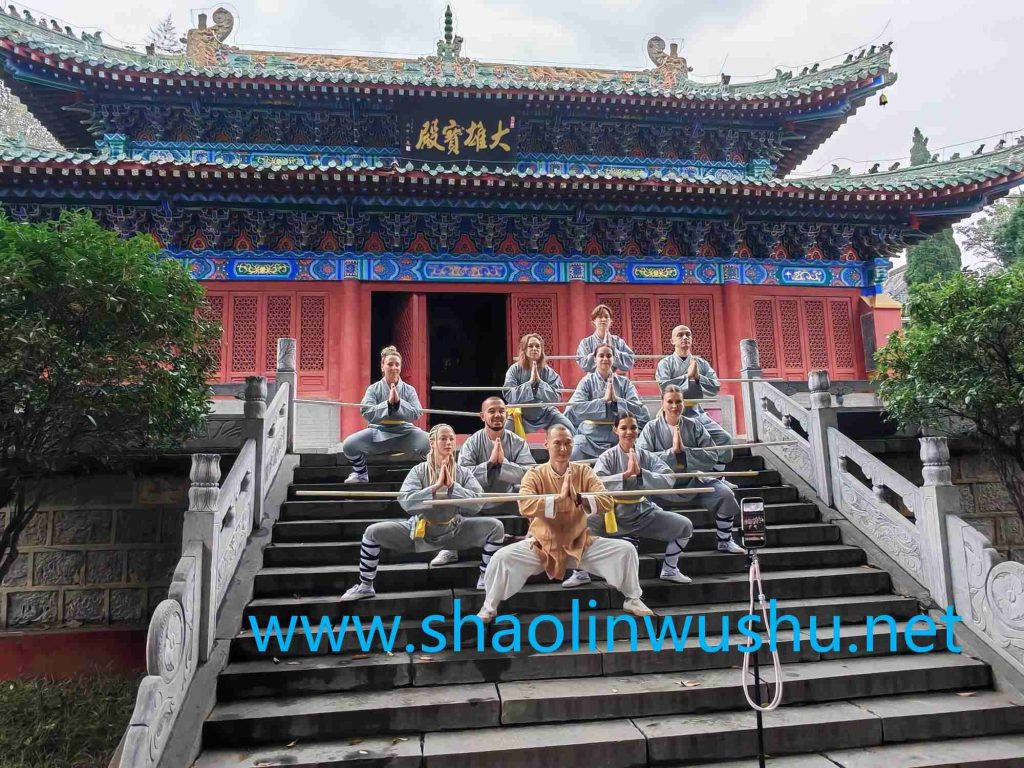
Many travellers come to Shaolin Temple, take photographs of the ancient halls and stone steles, watch a prearranged performance, and leave with only a visual impression. Yet even a single hour of hands-on Shaolin Kungfu training changes everything. It moves Shaolin from something you merely watch into something you directly live.
1. One Hour Is Enough to Break the Cinematic Myth
Most overseas learners know Shaolin Kungfu only through edited clips, action movies or weekly classes in local cultural centres. They imagine it as flashy jumps, powerful strikes and combat tricks. In one short guided session, under the instruction of local coaches, you learn that Shaolin movement begins with stance, breath and alignment. You feel how the hips, spine and breath must move as one. You quickly discover that its power does not come from brute force alone. This first physical encounter strips away theatrical fantasy and lets you touch its real foundation.
2. It Lets You Grasp the Core Idea of “Chan and Martial Arts as One”
Chan is not just passive sitting, and Shaolin Kungfu is not merely fighting. Every basic form is a moving meditation. When you slow down to hold a horse stance, sink your shoulders, follow your breath and repeat simple hand sequences, your mind naturally settles. Distracting thoughts fade. In just sixty minutes, you will understand what monks mean when they say that martial arts train the body so the mind can calm. Reading about this philosophy, or hearing it explained, cannot compare with the quiet focus you find while practising.
3. It Connects You to the Land and Heritage of Songshan
Shaolin Kungfu was born in these mountains, shaped by the climate, terrain and monastic lifestyle across more than fifteen centuries. When you practise outdoors within the temple grounds, surrounded by old pines, ancient walls and the quiet rhythm of the monastery, you are not simply doing a workout. You are practising in the original setting where this tradition matured. Even a short session carries a different weight than training in a gym thousands of kilometres away. The place itself becomes part of the lesson.
4. It Offers a Complete, Embodied Taste of Eastern Wellness
Shaolin practice integrates the same principles found in the Tendon-transmuting Sutra and Eight Pieces of Brocade: opening the meridians, relaxing tension, circulating internal energy and harmonising body and spirit. You do not need months of training to feel the difference. Many first-time participants notice looser shoulders, steadier breathing and a quieter mind by the end of the hour. For visitors who travel far to seek Oriental wellness wisdom, this is a compact, accessible entry point. It is not extreme exercise; it is a gentle but powerful reset.
5. It Gives You a More Authentic Story to Carry Home
If you only watch a show, your memory is of other people’s skill. If you try it yourself, even imperfectly, you leave with personal experience. You will know how demanding a simple stance can be, how much patience each movement requires, and why Shaolin disciples keep practising year after year. This personal insight lets you share Shaolin culture with greater respect and nuance. You no longer speak only as an observer, but as someone who has felt its discipline.
6. It Honours the Spirit of Shaolin: Self-Mastery Rather Than Domination
The true aim of Shaolin Kungfu is not to defeat others, but to master oneself. Even in one hour, you learn to observe your own limits, calm impatience and move with intention. In a world full of quick digital images and superficial travel checklists, this brief physical meditation is a rare chance to slow down, focus on yourself and meet the living heart of Shaolin.
Conclusion
You may not become a master. You may not remember all the forms. But you will leave with something no photograph or video can give: the feeling of Shaolin Kungfu in your own body. That is why, if you travel all the way to Shaolin Temple, you should make time for even just one hour.
