

Keldon Johnson’s Shaolin Zen Kungfu Journey at Shaolin Temple
1. Trip Background
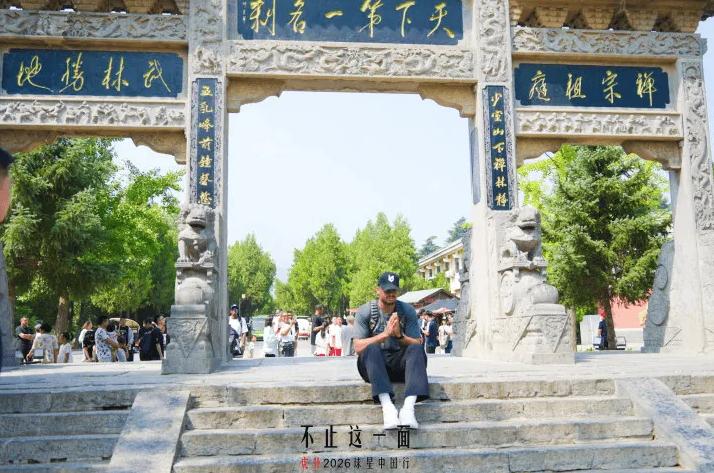
During the 2026 off-season, San Antonio Spurs star Keldon Johnson embarked on his China Tour themed Journey of Cultivation, with Shaolin Temple on Song Mountain in Dengfeng, Henan as his first stop. Inspired by his teammate Victor Wembanyama’s previous retreat at Shaolin, Keldon shaved his head alongside Wembanyama earlier this year, forming an early connection with Shaolin culture. Unlike most athletes who only make sightseeing stops, he arranged a two-day immersive Shaolin Zen Kungfu experience integrating Shaolin Kungfu training and Chan meditation, building a bridge for cultural exchange between competitive basketball and Shaolin Zen Kungfu.
2. Time & Venue
Time: July 19 – July 20, 2026
Venue: Shaolin Temple, Song Mountain, Dengfeng, Henan
Instructor: Shaolin Kungfu coach Liang Xiaolong
The curriculum follows the trinity philosophy: physical refinement, spiritual cultivation, and practical combat.
3. Schedule Highlights
3.1 Temple Tour, Buddhist Worship & Shaolin Kungfu Showcase
Keldon arrived at the main gate of Shaolin Temple and toured the ancient architectural complex. He paid homage in the halls and watched a group performance by Shaolin monks demonstrating a wide array of traditional weapons. He gained direct insight into the history and essence of Shaolin culture where Zen and Shaolin Kungfu originate from the same root. Shaolin Temple presented him with a sword as a commemorative gift.
3.2 Shaolin Kungfu Training
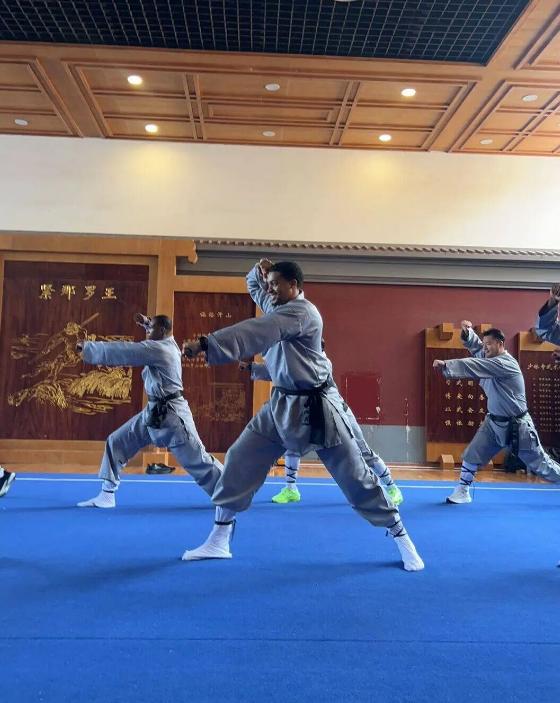
Dressed in training robes, Keldon trained systematically on the Shaolin Kungfu training ground:
Foundation work: Practicing horse stance, basic postures and entry-level Shaolin boxing. The coach corrected his posture and power delivery techniques.
Weapon training: Learning fundamental Shaolin staff techniques, including proper grip and basic swing movements, and understanding the mechanics of power generation in traditional Shaolin Kungfu.
Exchange & discussion: He discussed balance, strength control and rhythm adjustment with Shaolin monks, comparing training philosophies between Shaolin Kungfu and basketball fitness training.
Keldon stayed fully focused throughout training and commented that static stance training demands far more mental endurance than in-game competition.
3.3 Chan Meditation Experience
Beyond Shaolin Kungfu training, he attended meditation sessions in the Chan hall to practise breathwork and concentration training. He shifted from the high-intensity competitive mindset to quiet self-reflection, experiencing the core Shaolin philosophy: Shaolin Kungfu carries forward Zen wisdom. In interviews, Keldon shared that meditation brought him rare inner peace.
3.4 Traditional Cultural Experiences
The itinerary also included Chinese tea ceremony to learn traditional etiquette, as well as intangible cultural heritage stone rubbing, enabling him to experience Chinese traditional culture from multiple dimensions.
4. Personal Reflections & Cultural Impact
Personal takeaways: Keldon stated that his Shaolin journey was not merely physical exercise but a process to temper his mind and strengthen self-discipline. He hoped to apply the focus gained from meditation to the upcoming new NBA season. He shared training clips on social media and described his Shaolin experience as incredible and unforgettable. Fans affectionately nicknamed him “Keldon Monk”. Relevant content went viral on social platforms at home and abroad.
Cultural exchange value: The firsthand visit and systematic Shaolin Kungfu training of an overseas professional athlete helps audiences worldwide better understand Shaolin Zen Kungfu culture.
5. Follow-up Arrangements
After concluding his cultivation journey at Shaolin Temple, Keldon continued his China Tour. He took part in pickup basketball matches at outdoor courts in Zhengzhou before travelling to Taiyuan and Datong for more basketball events and cultural exchange activities.
Keldon Johnson’s Shaolin Retreat: An In-depth Analysis of Shaolin Kung Fu and Modern Basketball
Keldon Johnson’s visit to Songshan Shaolin Temple, where he learned Shaolin boxing and staff techniques and experienced Zen meditation, is far more than a simple cultural tourism activity. Following the intensive Shaolin retreats of Victor Wembanyama and Jaylen Brown, a growing number of NBA players affiliated with the San Antonio Spurs have embraced Shaolin culture. This trend reveals a profound truth: though stemming from vastly different backgrounds and continents, Shaolin Zen Shaolin Kungfu and modern basketball share striking similarities in three core dimensions: physical biomechanics, competitive philosophy, and mental cultivation.
I. Fundamental Physical Logic: Rooted in Ground Force and Unified Body Mechanics
The core tenet of Shaolin Kung Fu lies in a stable lower body, balanced center of gravity, and coordinated full-body force, which perfectly aligns with the biomechanical principles of basketball.
1. Horse Stance: The Static Prototype of On-Court Physical Contest
Johnson once commented that holding a horse stance is more endurance-testing than basketball physical confrontation. Requiring a lowered hip, grounded sole, and tightened core, the horse stance essentially trains bodily proprioception under imbalance. Translated to basketball, low-post positioning, defensive physical resistance, shoulder sinking before penetration, and quick stops and direction changes all rely on a solid lower-body foundation. Just as in Shaolin Kungfu, losing one’s center of gravity leads to complete passivity in on-court collisions.
2. Force Generation System: Bottom-Up Power Transmission Through the Torso
Shaolin boxing and staff techniques emphasize driving force from the legs, transmitting power through the waist, and delivering force via the hands, rejecting brute upper-body strength alone. Modern basketball’s shooting power generation, penetrating resistance, and jumping finishes follow the exact same kinetic chain. Many players struggle with inconsistent mid-to-long range shots and distorted movements under pressure precisely because they fail to engage their legs and torso, relying solely on arm strength. The force sequence Johnson learned from staff practice can be perfectly applied to optimize offensive movements.
3. Dynamic and Static Transition: The Game of Rhythm, Virtuality and Reality
Shaolin Kung Fu advocates remaining as calm as a sitting maiden at rest and striking as fast as a thunderbolt in motion, using deceptive footwork to confuse opponents. Similarly, basketball players break defenses through rhythm shifts, pauses, and variable speed. Both disciplines create predictive gaps for opponents by controlling physical rhythm in dynamic confrontation.
II. Core Competitive Spirit: Cultivating Mind Through Shaolin Kungfu, Basketball as a Lifelong Discipline
The essence of Shaolin culture is the integration of Zen and Shaolin Kungfu: tempering the physique externally and cultivating the mind internally. It transcends physical confrontation to pursue self-transcendence, resonating deeply with the long-term competitive pursuit of professional basketball.
1. The Ultimate Rival Is Oneself
Shaolin Zen philosophy holds that conquering oneself is true bravery. The NBA arena is filled with high-intensity competition, losing streaks, injury setbacks, and public opinion pressure. The ceiling of elite athletes rarely lies in physical fitness, but in emotional management. Zen meditation and breath regulation train athletes to eliminate distractions in high-pressure, chaotic environments and make rational decisions in crucial moments. This is the core connotation of Johnson’s “spiritual cultivation tour”.
2. Solid Fundamentals Bring Long-Term Success
Shaolin Temple always prioritizes repetitive practice of basic boxing and stance skills over fancy moves. The same applies to modern basketball: there are no shortcuts to dribbling, footwork, defensive positioning, and shooting fundamentals. After watching Shaolin monks’ demonstrations, Johnson deeply realized that all brilliant athletic moves, whether in Shaolin Kungfu or basketball, are built on tedious, consistent basic training.
3. The Balance of Hardness and Softness
Shaolin Kung Fu is not purely aggressive; it teaches that rigid force cannot sustain long, and softness accumulates power. Basketball also demands such balance: continuous high-intensity offense leads to physical exhaustion. Only by conserving energy, adjusting rhythm, and balancing offense and defense can players endure the grueling NBA season.
III. On-Court Game Philosophy: Shaolin Kungfu Wisdom for Basketball Offense and Defense
Interconnected Offensive and Defensive Concepts
– Shaolin Defense: Guarding the core position, observing opponents’ movements, and striking only after the opponent acts. Basketball Equivalent: Maintaining defensive position, predicting passing lanes, avoiding unnecessary position loss and reckless jumping.
– Shaolin Offense: Identifying flaws and delivering coherent, decisive strikes. Basketball Equivalent: Penetration, passing, off-ball movement, capturing defensive loopholes to complete smooth offensive possessions.
Spatial and Distance Perception
Shaolin Kungfu combat centers on controlling distance and judging advance and retreat scales. Basketball is essentially a game of distance as well — a single step of space between offense and defense determines the success of penetration, shooting, and stealing. Long-term Shaolin Kungfu practitioners develop acute distance perception, a physical awareness that translates directly to on-court judgment.
IV. Complementary Value of Eastern and Western Sports Systems: A Supplementary Path Beyond Modern Training
Modern basketball training relies heavily on sports science, data analysis, and strength equipment, delivering precise and efficient results. However, it focuses excessively on physical function while neglecting integrated mind-body training. Shaolin Zen Shaolin Kungfu perfectly compensates for this deficiency:
1. Strengthening Deep Stabilizer Muscles: Stance and footwork training activate fine muscle groups rarely targeted by conventional strength training, improving balance and reducing sports injury risks.
2. Building Autonomous Breathing Regulation: Zen breath control helps athletes independently adjust heart rate, solving problems of chaotic breathing and rigid movements during intense game moments.
3. Providing Long-Term Spiritual Motivation: The lengthy NBA season easily triggers athletic burnout. The concept of “spiritual cultivation” helps athletes establish long-term goals and free themselves from anxiety over single-game wins and losses.
It is crucial to clarify objective boundaries: Shaolin Kung Fu cannot directly improve specialized basketball skills such as dribbling and shooting, and there is no shortcut to basketball proficiency through Shaolin Kungfu. Instead, it provides a set of physical perception methods, mental training systems, and competitive thinking frameworks, empowering athletes with fundamental underlying capabilities rather than superimposing professional skills.
V. Cultural Significance of Keldon Johnson’s Shaolin Visit
The nature of NBA stars’ Shaolin visits has evolved dramatically, from casual sightseeing by Shaquille O’Neal and Dwyane Wade in the past, to Victor Wembanyama’s intensive spiritual retreat, and finally to Johnson centering his China tour on “Zen Shaolin Kungfu cultivation”. Previously, such visits were mostly commercial symbols and exotic cultural experiences. Today, more players actively explore the mind-body training logic behind Shaolin culture. This is a two-way cultural exchange: on one hand, Shaolin Shaolin Kungfu spreads globally through the top basketball stage, showcasing that traditional Chinese Shaolin Kungfu boast a complete sports philosophy beyond performance art. On the other hand, Western modern competitive sports draw wisdom from ancient Eastern mind-body unity philosophy to break through athletic bottlenecks.
VI. Conclusion
Despite different carriers and rules, Shaolin Kung Fu and modern basketball share identical underlying logic: a stable lower body as the foundation, coordinated force as the core, balanced gravity as the key; tempering the physique externally and cultivating the mind internally; capturing opportunities in dynamic confrontation and achieving self-breakthrough through persistent daily practice. Johnson’s experience of practicing stances, Shaolin Kungfu, and Zen meditation at Shaolin Temple is essentially a cross-civilization dialogue of sports. The ultimate pursuit of athletic competition transcends Eastern and Western divides — building a strong body and a peaceful mind is the common pursuit of all elite athletes.
